Monday, April 27, 2009
CMT - whaaat?
CMT or Charcot Marie Tooth is one of the most common neuromuscualar diseases in the United States, my own grandmother and aunt have suffered from this disease for over 30 years. I did previous research on this topic for one of my Anatomy classes in school but I recently found extended research on possible supplemental therapy options. I will be presenting on this information and the background of CMT.

Wednesday, April 15, 2009
Aww Waterbears!
I have chosen to do my presentation on the phylum Tardigrada. They have the amazing ability to survive in extreme temperatures. I'll tell you all about them!
Wednesday, April 1, 2009
Milk or calcium does a body good!
From the below posts of my fellow bloggettes one could determine that we were put to the test (literally) on how much biology information we have gleaned over the years. The favorite stumbling block this year seems to be plants and while I will say that on some of the questions for photosynthesis, angiosperms, life cycles, and ATP production I did make a double take but the dumb mistake I made had to do with human physiology, specifically hormone secretion.
The question asked when serum calcium levels fall, an adequate level is restored in humans by secretion of either thyroxine, glucagon, growth hormone, parathyroid hormone, or calcitonin. Now before you jump the gun and pick calcitonin like someone I know lets do a little history. The way that I break it down on a multiple choice question is by looking at each word and separating the meaning from each word...that is what I normally do but in this case I just flippantly picked calcitonin because...calcium is the meaning of the first part. However I digress....so thyroxine.
Thyroxine is a thyroid hormone secreted by the thyroid gland by way of follicular cells which facilitates the stimulation of metabolic processes and influencing physical development. No for calcium levels.
Glucagon - easy to dismiss because of its root word that being glucose. Glucagon is secreted by the pancreas in order to help with glucose levels in the body. When glucose levels are too low (hypoglycemia) the pancreas secretes glucagon into the system causing the liver to convert glycogen into glucose thereby restoring blood glucose levels in the body. Again no calcium.
Growth Hormone - really? no question here it is not for calcium
Parathyroid Hormone - or PTH is secreted by the parathyroid glands and the main function of PTH is regulating serum calcium levels. DING DING DING we have a WINNER!!!
Sorry premature excitement...anyways. PTH regulates calcium levels in three tissues: bone, kidney, and the intestine. When serum calcium levels in the body decrease, the levels are restored by the secretion of PTH. This hormone will either cause calcium levels to increase by increasing the level of bone resorption this is done by indirect stimulation of osteoclasts thereby breaking bone down in order to release calcium into the blood. Calcitonin is the opposite, it works to decrease calcium concentrations in the blood.
Moral of the story is break the word down and drink more milk!!!!!
The question asked when serum calcium levels fall, an adequate level is restored in humans by secretion of either thyroxine, glucagon, growth hormone, parathyroid hormone, or calcitonin. Now before you jump the gun and pick calcitonin like someone I know lets do a little history. The way that I break it down on a multiple choice question is by looking at each word and separating the meaning from each word...that is what I normally do but in this case I just flippantly picked calcitonin because...calcium is the meaning of the first part. However I digress....so thyroxine.
Thyroxine is a thyroid hormone secreted by the thyroid gland by way of follicular cells which facilitates the stimulation of metabolic processes and influencing physical development. No for calcium levels.
Glucagon - easy to dismiss because of its root word that being glucose. Glucagon is secreted by the pancreas in order to help with glucose levels in the body. When glucose levels are too low (hypoglycemia) the pancreas secretes glucagon into the system causing the liver to convert glycogen into glucose thereby restoring blood glucose levels in the body. Again no calcium.
Growth Hormone - really? no question here it is not for calcium
Parathyroid Hormone - or PTH is secreted by the parathyroid glands and the main function of PTH is regulating serum calcium levels. DING DING DING we have a WINNER!!!
Sorry premature excitement...anyways. PTH regulates calcium levels in three tissues: bone, kidney, and the intestine. When serum calcium levels in the body decrease, the levels are restored by the secretion of PTH. This hormone will either cause calcium levels to increase by increasing the level of bone resorption this is done by indirect stimulation of osteoclasts thereby breaking bone down in order to release calcium into the blood. Calcitonin is the opposite, it works to decrease calcium concentrations in the blood.
Moral of the story is break the word down and drink more milk!!!!!
Wednesday, March 25, 2009
Who Knew.... Angiosperms Are Flowering Plants!
Well before googling the term Angiosperm I had no idea they were actually flowing plants... then I vaguely began to form a dim memory of my BIO 202 class in which I might have actually heard this information. Problem is, the memory is not complete. I don't know much about any topic even remotely related to botany... and I don't pretend to. But I decided to grin and bare it and perhaps even do a little research on the subject. Maybe this information will benefit me later on down the road?
Here goes:
Flowers are what actually makes angiosperms different from other seed plants. They serve as their reproductive structure and allow them to form a broad range of evolutionary relationships. You know what else is cool? Their stamens prevent them from performing self-fertilization which broadens the niches they effect.
The fact that angiosperms lay seeds sooner and faster than gymnosperms makes it hard for me to believe that these flowering plants aren't everywhere. In a way, however, they kind of are everywhere: they dominate terrestrial ecosystems, they are the most diverse and numerous land plant, and they are the most commercially significant plant to humans.
So with that I leave you with one final thought:
Watch out gymnosperms... here come the angiosperms!
Tuesday, March 24, 2009
What's the point of these dumb plants??
The senior assessment test, which was essentially a mini-version of the Biology subject GRE exam, consisted of questions which had been drawn from all corners of this awesome, complicated and often very detailed subject. Some specific areas covered by the assessment test included human anatomy and physiology, mechanisms of evolution, viral replication, genetics, population dynamics and the functions of certain plant tissues.
When it came to the plant section of the exam, I would have been completely lost if I had never taken Dr. Brauner’s General Botany class. The great majority of organismal work and studies of the other biology classes I’ve taken has solely dealt with different members from the following Kingdoms: Animalia, Eubacteria, and Archaea.
Because I had taken this class about plants, I was able to recognize that all of the questions about plant classification and tissue function had been something we had gone over at least once throughout that semester. Now, whether I could remember enough to correctly choose the right answer from the list of choices was a different story…
I also felt the same sense of familiarity with the same lack of certainty about minute details with other questions as well, such as those dealing with the finer points of metabolism and human physiology. The sheer amount and range of content that is covered by the subject exam makes it inevitable that moments like this will occur, often more than once, during the exam. Thus, the objective of this testing process is not only to ascertain the amount of detailed biology facts that one has memorized over the years, but to test whether the student is able to narrow down the answer choices by eliminating those which are obviously absurd and by guessing wisely.
I do not believe I will actually ever have to define ‘spongy mesophyll’ or ‘palisade parenchyma’ to anyone once I graduate from Ashland University and later from the graduate veterinary program of a yet unspecified college.
However, learning the basics about this subject is a very good idea simply for the fact that you will become more familiar with some specialized terminology that may help you later on if your career in biology somehow leads you down the “plant path”, or you may learn something more general about your specific learning process or interests.
(And just a short note… ‘spongy mesophyll’ are loosely arranged cells in the leaf around which most gas exchange occurs and ‘palisade parenchyma’ are the cells which contain the highest number of chloroplasts and are responsible for the vast majority of photosynthesis. Both of these types of cells are found in the leaves of plants.)
When it came to the plant section of the exam, I would have been completely lost if I had never taken Dr. Brauner’s General Botany class. The great majority of organismal work and studies of the other biology classes I’ve taken has solely dealt with different members from the following Kingdoms: Animalia, Eubacteria, and Archaea.
Because I had taken this class about plants, I was able to recognize that all of the questions about plant classification and tissue function had been something we had gone over at least once throughout that semester. Now, whether I could remember enough to correctly choose the right answer from the list of choices was a different story…
I also felt the same sense of familiarity with the same lack of certainty about minute details with other questions as well, such as those dealing with the finer points of metabolism and human physiology. The sheer amount and range of content that is covered by the subject exam makes it inevitable that moments like this will occur, often more than once, during the exam. Thus, the objective of this testing process is not only to ascertain the amount of detailed biology facts that one has memorized over the years, but to test whether the student is able to narrow down the answer choices by eliminating those which are obviously absurd and by guessing wisely.
I do not believe I will actually ever have to define ‘spongy mesophyll’ or ‘palisade parenchyma’ to anyone once I graduate from Ashland University and later from the graduate veterinary program of a yet unspecified college.
However, learning the basics about this subject is a very good idea simply for the fact that you will become more familiar with some specialized terminology that may help you later on if your career in biology somehow leads you down the “plant path”, or you may learn something more general about your specific learning process or interests.

(And just a short note… ‘spongy mesophyll’ are loosely arranged cells in the leaf around which most gas exchange occurs and ‘palisade parenchyma’ are the cells which contain the highest number of chloroplasts and are responsible for the vast majority of photosynthesis. Both of these types of cells are found in the leaves of plants.)
Sunday, February 22, 2009
It's Good to Know the Odds are Against Me... Not
Like most standardized tests, the GRE claims to measure general knowledge acquired by the individuals who take it. However, most people think this is an inaccurate description of what it really measures: an individual's "thinking skills." In this blog entry, I will talk about the research I found on the bias of the test... and complain about it.
The GRE is used to measure applicants against each other and each individual's potential for success in graduate programs. Some schools rely on the GRE to make decisions about applicants because it is a numerical value. But looking only at these standardized test scores, schools might pay no attention to other determinants of success among graduate students like drive, passion, determination, and charisma, and whether or not each applicant has them. Ultimately, these characteristics seem vital to success. How does one expect to be successful if they don't care about or want to use their knowledge?
Discrimination started against the individuals taking the GRE when it became a computer-based test. The computer-based version zeros in on a person's score within the first few questions in each section. This is unlike early paper versions which offered every student questions weighted with the same value. You're now probably thinking what I'm thinking: how in the world is this fair? Well the truth is, it's not.
Despite what the ETS says, the GRE doesn't measure an individual's critical skills associated with competence, it measures the students ability to pace and guess strategically. This means that exceptional GRE scores can be prepared for by learning techniques for answering questions that have nothing to do with the amount of knowledge and individual has obtained. I bet you know what that means: students with the money and access to test-prep materials have an advantage and these advantages are, of course, associated with a high socioeconomic status. Just because someone has the money to go to test-prep classes and buy every book on the GRE in the book store, it doesn't mean they will do well on the test the first time they take it; they just have the money to take it again.
The GRE further discriminates against females and minorities. Research shows that most females receive better grades in undergraduate studies but lower scores on the GRE and other standardized tests. On average, white men tend to score around 100 points better on the GRE than females of various cultures and all minority males. Within ethnic groups, men received higher scores than females. Overall, people who proclaimed themselves as white scored higher on the verbal and analytical sections that all of the other ethnic groups studied. At this point I'm thinking, "WTF?!?!" This kind of information is seriously disturbing... at least to me.

Figure 1: What graduate schools picture when they see my GRE scores
One good thing about the ETS, however: they discourage universities from using GRE scores to discriminate against applicants. This might be because GRE scores were only responsible for explaining a 9% variation between students' first year graduate grades. Hey graduate schools, you know what would be a better way of screening applicants? Undergraduate grades, which were responsible for explaining 14% of the variation in first year graduate grades between students. Furthermore, graduate schools that placed a high emphasis on GRE scores accepted mostly white male students. So for all you minority females with a low socioeconomic status, good luck! The odds are against you.....
Thursday, February 19, 2009
Sniffing out new mates...
There are many things that people use to rate how intriguing a potential “significant other” appears. The most common features people use to evaluate their prospective quarry are height, general physique, facial features, personality type and (of course) income. :-) However… according to some researchers, evaluation of the potential “significant other” may also be occurring at a much more primal level than most people realize.
It is hypothesized that humans are able to produce pheromones and pick up on those pheromones produced by other members of the human race. This hypothesis is not entirely unreasonable considering how important pheromone use is to other mammals such as rats, mice and dogs who use these to mark territories and signal to the opposite sex that they are ready to mate.
Pheromones essentially function as external hormones in the fact that they are small chemicals secreted from the body that have the power to influence the physiology or behavior of a conspecific (member of the same species).
Martha McClintock first published evidence for the existence of human pheromones in 1971 in the peer-reviewed journal Nature. This study was conducted on women living together in a college dorm setting. It was discovered that the menstruation cycles of women who spent great amounts of time together (such as two best friends) would synchronize over time. This provided very strong evidence that people are able to produce pheromones which affect the physiology of other members of the human race in various ways.
According to a 2001 review article of this pheromone issue, sufficient evidence from various research studies has been accumulated to confidently state that humans do, indeed, produce a certain level of pheromones.
Obviously, whether or not people produce pheromones will not be of much interest to the general public if the only power they have over the human body is synchronize menstruation timing of unsuspecting females.
However, if it was discovered, for example, that higher concentrations of these pheromones could increase one’s chance of ‘getting lucky’, the general public’s interest in these little compounds would significantly increase. Most scientific work today dealing with human pheromones is focused on the two hormone-like chemicals ‘androstadienone’ (which is thought to function as a sex attractant to women) and ‘estratetraenol’(which is thought to function as a sex attractant to men). Both of these compounds are found in human sweat.
Further work from McClintock and Jacob in 2000 has shown that the effects of these hormones, while they do have very interesting effects on brain function and psychological state, are not as powerful as the advertising companies are claiming. Nevertheless, other works, such as that of Norma McCoy, PhD, in 2002 and Winnifred Cutler, PhD, in 1998 have found that the male pheromone additive to a perfume significantly increased the man’s likelihood of having sex.
However… The results obtained by Winnifred Cutler, PhD, in 1998 may or may not be partially biased as she was one of the founders of a certain company specializing in perfumes containing pheromone additives. Even though the scientific work being done with these two compounds have not shown the simple cause-and-effect relationship between these products and sex, many many companies are still making profits on items such as candles, lotions and perfumes that are infused with high concentrations of these potentially sexy human pheromones.
My very favorite site advertising pheromone perfumes was this link which shows an attractive, presumably half-naked model seductively explaining the nuances of how this chemistry is supposed to work....
It is hypothesized that humans are able to produce pheromones and pick up on those pheromones produced by other members of the human race. This hypothesis is not entirely unreasonable considering how important pheromone use is to other mammals such as rats, mice and dogs who use these to mark territories and signal to the opposite sex that they are ready to mate.
Pheromones essentially function as external hormones in the fact that they are small chemicals secreted from the body that have the power to influence the physiology or behavior of a conspecific (member of the same species).
Martha McClintock first published evidence for the existence of human pheromones in 1971 in the peer-reviewed journal Nature. This study was conducted on women living together in a college dorm setting. It was discovered that the menstruation cycles of women who spent great amounts of time together (such as two best friends) would synchronize over time. This provided very strong evidence that people are able to produce pheromones which affect the physiology of other members of the human race in various ways.
According to a 2001 review article of this pheromone issue, sufficient evidence from various research studies has been accumulated to confidently state that humans do, indeed, produce a certain level of pheromones.
The above findings largely satisfy the classic definition of pheromones: “Substances which are secreted to the outside by an individual” (in humans: sweat) “are received by a second individual of the same species, in which they release a specific reaction” (in humans: change in timing of ovulation and sex-specific changes in physiological measures, levels of hormones, and brain activity) “for example, a definite behavior or a developmental process.” It is only this last component of the classic definition that has not been decidedly demonstrated in humans.One of the strongest arguments against the human pheromone hypothesis argument is the fact that it is uncertain whether or not humans have a functional vomernasal organ (VNO). This organ is part of the accessory olfactory system and is the main, though not the only, manner in which the previously mentioned mammals sense the pheromones from other conspecifics. It was stated in this same 2001 review article that even though the functionality of the human VNO is not certain, this does not necessarily mean that humans cannot sense pheromones. Pheromones can be taken up and processed by way of the main olfactory system possessed by humans.
Obviously, whether or not people produce pheromones will not be of much interest to the general public if the only power they have over the human body is synchronize menstruation timing of unsuspecting females.
However, if it was discovered, for example, that higher concentrations of these pheromones could increase one’s chance of ‘getting lucky’, the general public’s interest in these little compounds would significantly increase. Most scientific work today dealing with human pheromones is focused on the two hormone-like chemicals ‘androstadienone’ (which is thought to function as a sex attractant to women) and ‘estratetraenol’(which is thought to function as a sex attractant to men). Both of these compounds are found in human sweat.
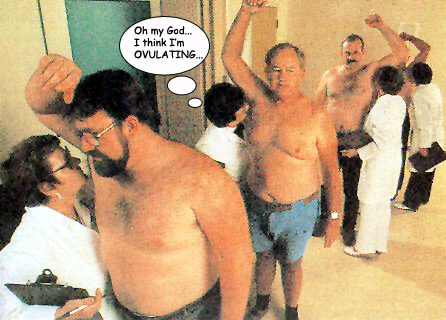
Further work from McClintock and Jacob in 2000 has shown that the effects of these hormones, while they do have very interesting effects on brain function and psychological state, are not as powerful as the advertising companies are claiming. Nevertheless, other works, such as that of Norma McCoy, PhD, in 2002 and Winnifred Cutler, PhD, in 1998 have found that the male pheromone additive to a perfume significantly increased the man’s likelihood of having sex.
However… The results obtained by Winnifred Cutler, PhD, in 1998 may or may not be partially biased as she was one of the founders of a certain company specializing in perfumes containing pheromone additives. Even though the scientific work being done with these two compounds have not shown the simple cause-and-effect relationship between these products and sex, many many companies are still making profits on items such as candles, lotions and perfumes that are infused with high concentrations of these potentially sexy human pheromones.
My very favorite site advertising pheromone perfumes was this link which shows an attractive, presumably half-naked model seductively explaining the nuances of how this chemistry is supposed to work....
Subscribe to:
Posts (Atom)